This past weekend the staff of seahorse tours went to Mount Samat in Pillar Bataan
Along with the island fortress of Corregidor, Mount Samat was the site of the most vicious battle against the Japanese Imperial Army in 1942. 
Suffering heavy losses against the Japanese all over Luzon, Filipino and American soldiers retreated to Bataan Peninsula to regroup for a last valiant but futile stand. The fall of Bataan on April 9, 1942 was the end of the one of the most famous battles of the Second World War. It was immediately followed up by what became known as the Bataan Death March, one of the most infamous forced marches of the Second World War.
U.S. and Filipino soldiers had been steadily retreating in the face of a Japanese offensive that had begun in the Philippines way back in December of 1941. Japanese troops landed on Luzon and began pushing south. They had been able to hold off defeat even though they were out-gunned, out-fed, and out-equipped.
After fierce battle lasting 3 days around Mount Samat, 78,000 exhausted, sick and starving men under Major General Edward P. King surrendered to the Japanese on April 9, 1942. It was, and still is, the single largest surrender of U.S. Forces ever. See more here
this site also has information
The Pacific War, more than any other theater, was a no-holds-barred, no-quarter-taken-none-given slugfest. And it was places like Bataan and the subsequent brutality of the March that helped make it so
Dambana ng Kagitingan (shrine of Valor) atop Mt. Samat ( 564 meters) in Pilar town Bataan was built in 1966 in memory of the soldiers of World War II.
Republic Act No. 7668, approved on 17 January 1994, declared Mount Samat in the province of Bataan to be a tourist spot whose natural beauty should be preserved and conserved and whose historical importance should be recognized. It then orders the Department of Tourism to prepare a tourism development plan involving the construction, installation and/or maintenance of facilities that will encourage tourism in the area.
Seahorse tours will be offering a tour that includes Mount Samat and the museum at the old Clark airbase. Details to be released soon. more Mt. Samat Photos


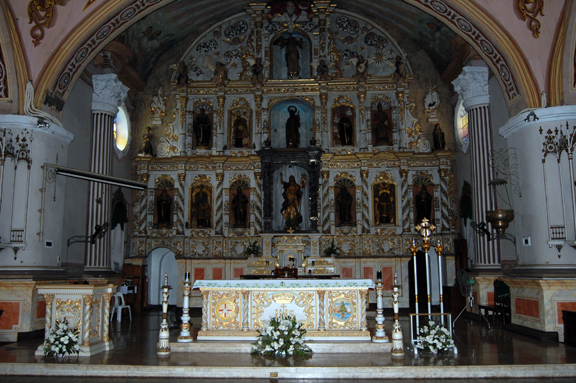
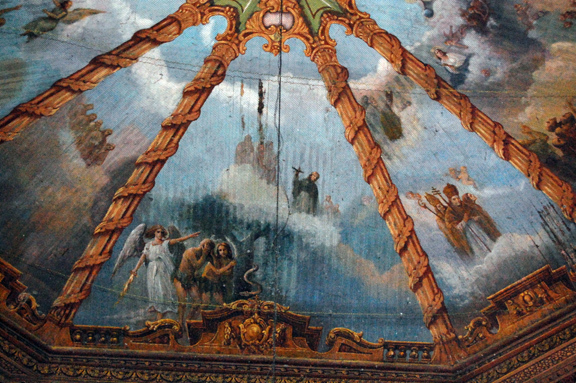
 Betis St. James Parish Church located in Guagua, Pampanga, Philippines is one of the most impressive churches I have seen. It is written that Art enthusiasts compare it to the Sistine Chapel, for its magnificent interior, although the Betis Church is also impressive in terms of symmetry, gracefulness and theme. Fr. Fernando Pinto started its construction in 1660 and was finally completed in 1770 by Fr. Jose de Cruz. The National Commission for Culture and the Arts (NCCA) declared this church a National Treasure, one of only 10 churches in the country bestowed that honor.